
What Is the Difference Between Natural and Mechanical Smoke Ventilation?

What Is the Difference Between Natural and Mechanical Smoke Ventilation? Natural smoke ventilation uses automatic windows, roof vents, louvres or smoke shafts to release smoke through natural buoyancy and pressure differences. In contrast, mechanical smoke ventilation uses powered extract fans, ductwork and smoke-control dampers to move smoke out of a building. Both systems can protect […]
Do Apartment Buildings Need AOV Systems?
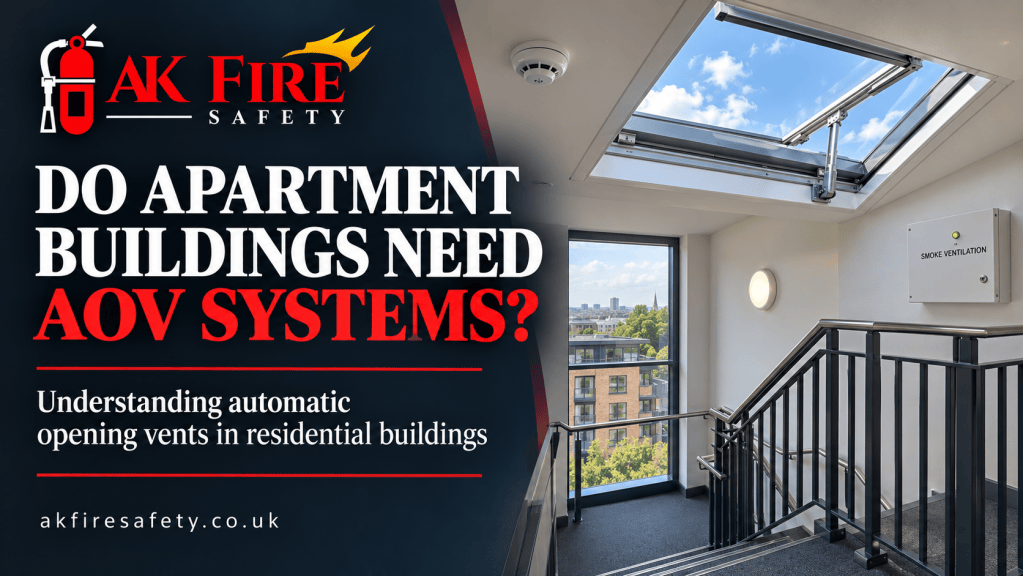
Apartment buildings must have smoke ventilation systems to ensure safe evacuation and control smoke spread in case of a fire. These systems, which include both natural and mechanical options, are strategically installed in corridors, stairways, and other critical areas to protect residents and firefighters.
Can an AOV System Reduce Fire Damage?
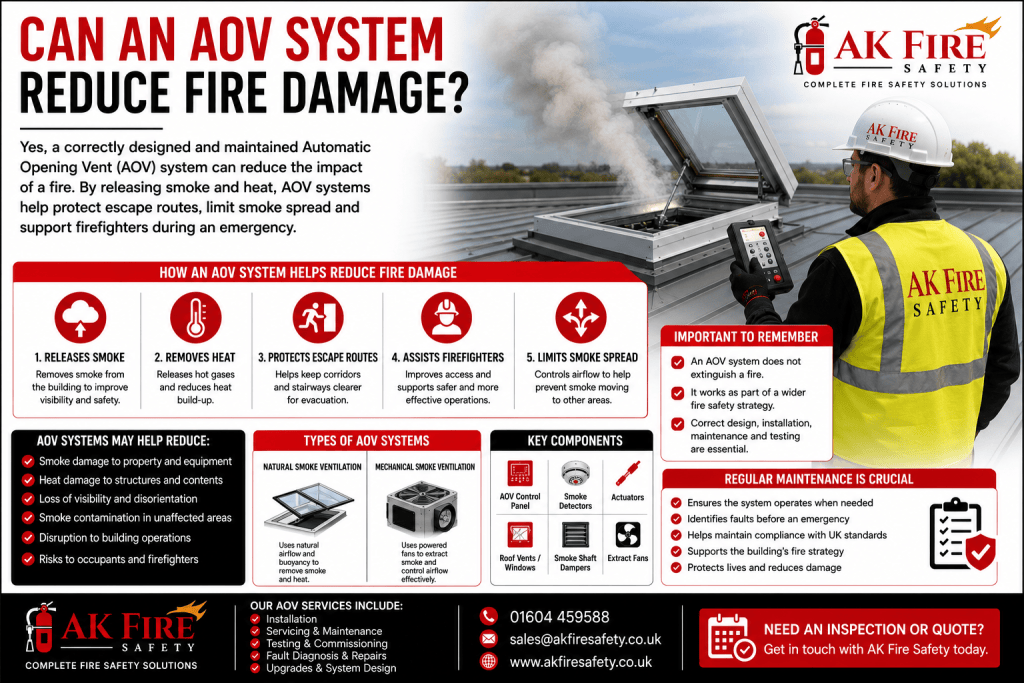
An AOV system is designed to reduce fire damage by releasing smoke, removing heat, and supporting escape routes. It enhances firefighter visibility and manual control, making it an essential component of modern fire safety systems.
What Are the Different Types of Fire Extinguishers?

Discover the seven main fire extinguisher types and learn how to choose the right one for your needs. From water extinguishers for common materials to specialized CO°2 extinguishers for electronics, understanding the different classes of fire is crucial for safety.
Can AOV Systems Be Connected to a Fire Alarm System?

Can AOV Systems Be Connected to a Fire Alarm System? Yes, an Automatic Opening Vent system can be connected to a fire alarm system. In many buildings, this connection allows the AOV system to operate automatically when the fire alarm detects smoke or receives a confirmed fire signal. However, the fire alarm panel does not […]
What happens during an AOV inspection

An AOV inspection is a critical process that ensures the safety and functionality of an Automated Optical Verification system. It involves identifying electrical and mechanical faults, confirming the proper operation of vents and dampers, and checking the activation of the correct equipment. By thoroughly reviewing the control panel and maintenance records, the inspection helps prevent fire hazards and ensures the system operates efficiently.
Can I Test an AOV System Myself?

Testing an AOV system is a crucial step in maintaining safety and efficiency. Routine testing ensures that all components are functioning correctly, while professional servicing provides comprehensive checks and repairs. By understanding the differences between these services, you can make informed decisions to keep your system in optimal condition
How often should AOV systems be tested
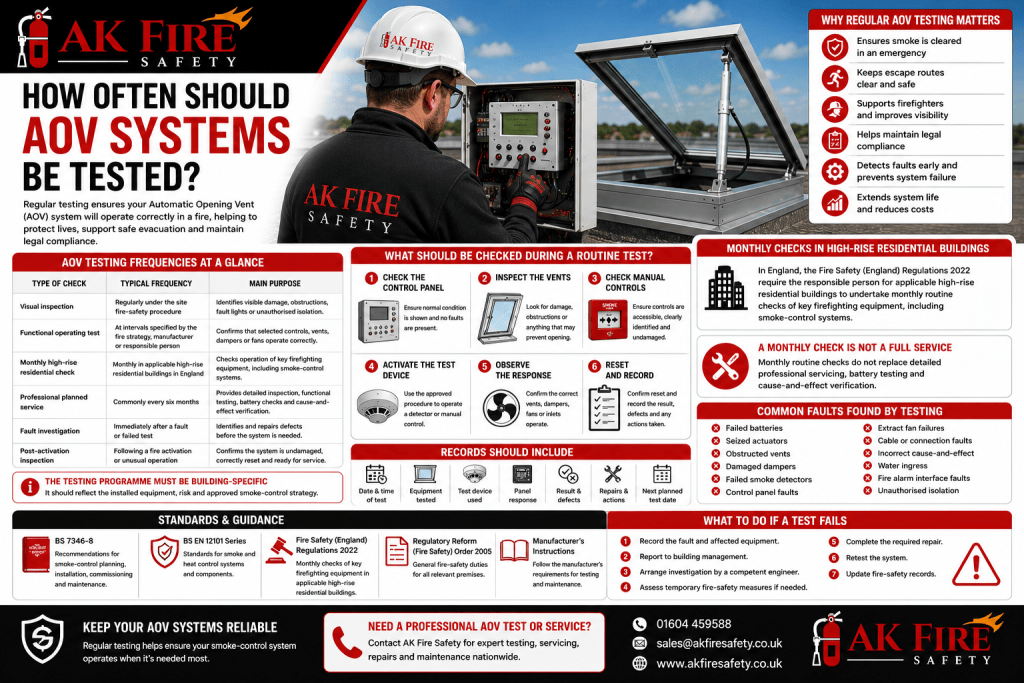
AOV systems play a vital role in fire safety, and their regular testing is essential. From visual inspections to professional planned services, each type of check contributes to the overall maintenance and reliability of these systems. By staying proactive, you
How often should AOV systems be serviced
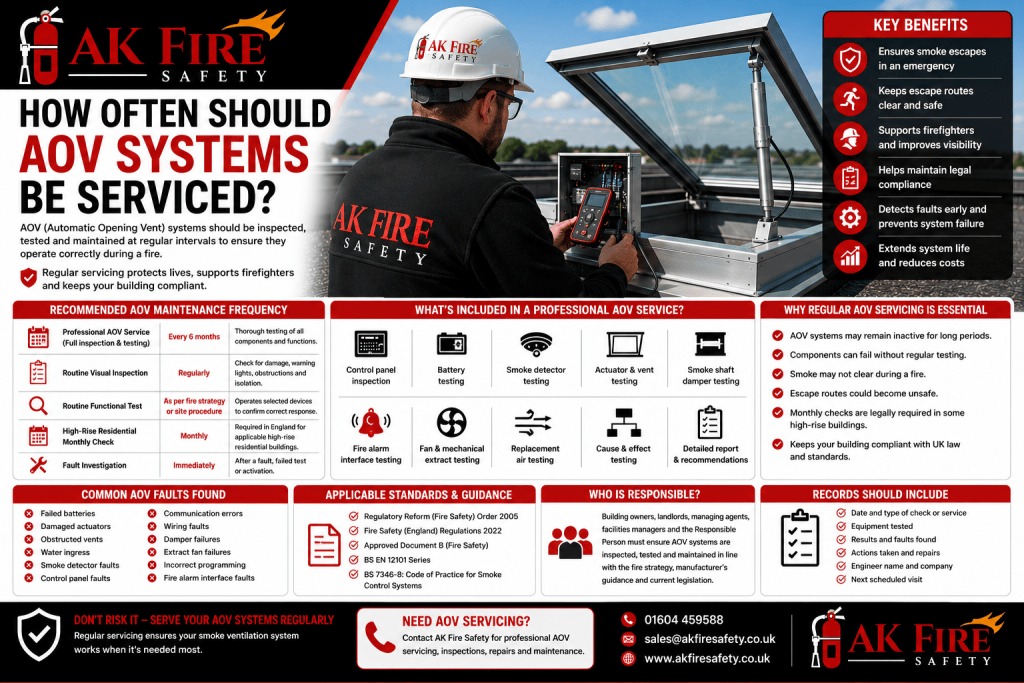
AOV systems should be checked or serviced regularly, according to the site procedure, to identify obvious damage, obstruction, warning lights, or unauthorized isolation. Routine functional tests should confirm that controls and selected vents respond correctly, and professional planned services should provide detailed testing of detection, controls, vents, actuators, batteries, and interfaces
What is smoke ventilation

Smoke ventilation is a critical system designed to remove smoke from communal escape routes, release heat and hot gases, and improve visibility during evacuation. It supports access for firefighters and reduces smoke spread into protected areas. This system is essential for maintaining a clearer layer of air beneath rising smoke