
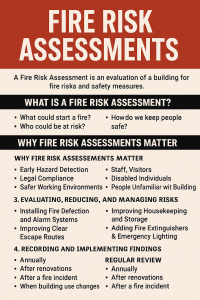
What Is a Fire Risk Assessment? (Definition + Purpose)
A Fire Risk Assessment is a legally required inspection that identifies fire hazards, evaluates the level of risk they pose, and outlines the safety measures needed to protect people and property. Every commercial building, workplace, and multi-occupancy residence must perform a fire risk assessment to stay compliant with current fire safety regulations.
In short:
A fire risk assessment is the foundation of effective fire safety management.
Why Fire Risk Assessments Are Essential for Every Building
1. Legal Compliance With Fire Safety Regulations
Fire safety legislation requires building owners or employers to complete a fire risk assessment and keep it updated. Non-compliance can lead to fines, prosecution, or closure notices.
2. Reduced Fire Hazards and Safer Environments
A detailed assessment highlights electrical faults, blocked exits, combustible materials, and other hazards that increase the chance of fire.
3. Protection of Staff, Customers, and Property
Regular assessments help prevent costly fires, protect lives, and reduce business interruption.
4. Better Evacuation Planning and Emergency Preparedness
A fire risk assessment ensures escape routes, emergency lighting, and fire alarms are suitable, accessible, and maintained.
5. Peace of Mind for Business Owners and Landlords
Knowing your fire safety plan is current and compliant eliminates uncertainty and reduces liability.
What a Fire Risk Assessment Includes (Step-by-Step)
A thorough, SEO-aligned fire safety assessment involves five key stages:
1. Identify Fire Hazards
Common hazards include:
-
Overloaded electrical circuits
-
Damaged wiring
-
Heating appliances
-
Flammable liquids or chemicals
-
Blocked escape routes
-
Poor housekeeping
2. Identify People at Risk
This includes:
-
Employees
-
Visitors
-
Contractors
-
Individuals with limited mobility
-
Residents in multi-occupancy buildings
3. Evaluate and Reduce the Risk
Fire safety professionals implement measures such as:
-
Installing or upgrading fire alarms
-
Maintaining fire extinguishers
-
Adding emergency lighting
-
Improving evacuation signage
-
Training staff in fire procedures
-
Removing or reorganizing combustible materials
4. Record, Plan, and Implement Findings
A detailed fire safety report outlines:
-
Risks
-
Required actions
-
Safety improvements
-
Timescales for completion
5. Review the Assessment Regularly
A fire risk assessment must be reviewed:
-
Every 12 months
-
After any structural changes
-
After a fire incident
-
When building occupancy changes
Who Should Carry Out a Fire Risk Assessment?
While small, low-risk premises may complete a basic assessment in-house, most buildings benefit from a competent fire safety specialist. A qualified assessor ensures full compliance with fire legislation and identifies risks that non-professionals may overlook.
Professional assessments are recommended for:
-
Commercial buildings
-
Industrial sites
-
Residential blocks
-
Retail properties
-
Hospitality and public venues
The Benefits of a Professional Fire Risk Assessment
✔ Accurate hazard identification
✔ Full compliance with fire safety laws
✔ Reduced insurance costs
✔ Protection from legal penalties
✔ Stronger fire safety strategy
✔ Safer environment for occupants
Common Mistakes Found During Fire Risk Assessments
Avoid these issues that frequently appear during inspections:
-
Fire doors propped open
-
Expired extinguishers
-
Missing or damaged smoke detectors
-
Blocked escape routes
-
Poor storage of flammable materials
-
No staff fire safety training
Fixing these problems dramatically improves your fire safety score.
Final Thoughts: Why Fire Risk Assessments Matter
A fire risk assessment is more than a legal requirement — it’s an essential safety process that protects people, property, and business continuity. By identifying hazards early and implementing corrective measures, organizations can reduce fire risks and remain fully compliant with fire safety regulations.
For the best results, assessments should be carried out by trained fire safety professionals who understand the legal, technical, and practical aspects of fire prevention.